What to Know
Music, pace and group energy can make step intensity appear to be a single setting. In reality, duration, rhythm, movement range and jumping are separate variables. This guide for Gizem Köymen considers low-impact options and progression through those distinctions. A thoughtful plan connects preparation, the main activity and recovery, rather than asking only how one section can become harder.
Intensity and impact describe different things
Impact concerns the mechanical interaction when the body contacts the floor or platform. Exercise intensity considers the task and the person's response more broadly. A movement with less jumping can still create substantial muscular and breathing demand. Conversely, a brief jumping sequence does not create the same total task as a longer session. Appearance alone cannot establish the whole intensity profile.
A low-impact option generally avoids adding a flight phase with the whole body unsupported: at least one foot remains in contact with the floor or platform. This does not mean zero joint loading. The body still rises, lowers and changes direction. Height, speed and placement remain relevant, so removing a jump is an option rather than a guarantee of identical comfort or effort for everyone.
Observe effort through more than one clue
Perceived effort relates to both the task and the person's condition that day. An agreed exertion scale helps communicate the experience, while speaking comfort offers a practical clue about breathing demand. These tools describe different aspects and can be considered together. The display, music and neighbouring participant cannot replace noticing one's own response.
Working-muscle effort should not be confused with sharp pain or loss of orientation. Marked joint pain, dizziness, chest pain or unexpectedly severe breathlessness call for stopping and appropriate assistance. An effort score cannot override that decision. Existing health conditions or exercise restrictions may require relevant professional guidance before participation. A group target does not remove individual circumstances or make every class option suitable.
Separate the variables that change demand
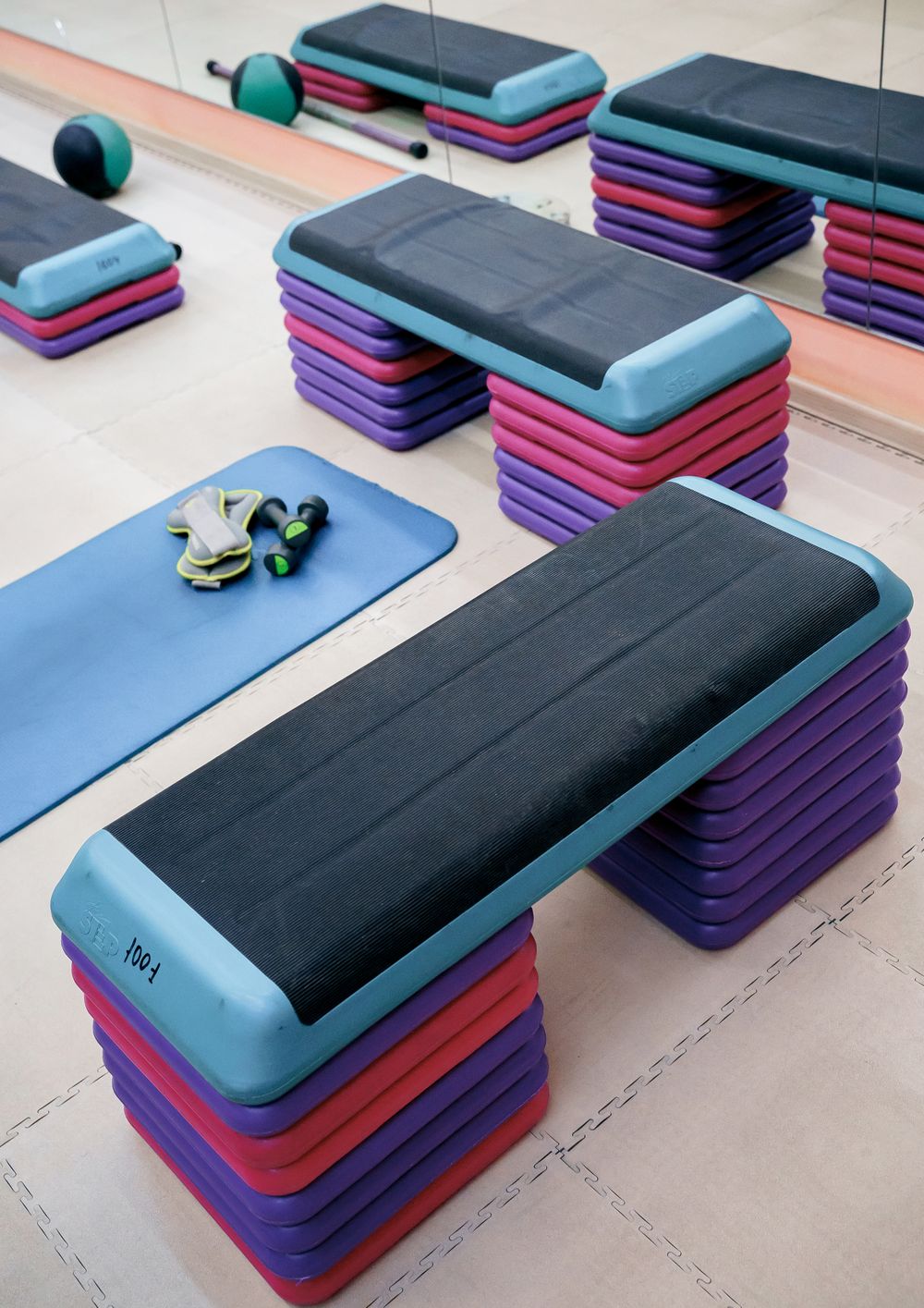
Repeating a basic pattern for longer increases total work. Faster rhythm can increase the number of transitions while reducing preparation time. Platform height changes vertical travel. Wider arm movements can alter upper-body involvement and coordination. Understanding their purpose prevents treating every modification as an interchangeable increase in difficulty.
Choreographic complexity is another demand. A new direction, leading-foot change and arm pattern can increase the amount of information to process. The task may feel tiring without producing heavy sweating. Learning coordination does not require constantly increasing physiological effort too. A familiar pattern can be established before one additional change is considered.
Preparation creates a workable starting point
The beginning of a class provides room to understand the platform, support and movement patterns. Simple steps can establish distance and clarify transitions. Demand changes gradually rather than requiring the most complex sequence immediately. The instructor's explanation and participant feedback provide information for the main section. Equipment stability and available surrounding space also belong to preparation, rather than being assumed correct once the music begins.
The main section does not need one uninterrupted level of difficulty. Familiar blocks and calmer transitions can be arranged around the session's purpose. Repeating a pattern instead of continually adding new ones can make effort and coordination easier to observe together. The reasoning behind the choices should remain understandable to participants.
Recovery belongs within the plan
Reducing the movement demand toward the end creates a transition from the harder section. This means more than changing a song. Step frequency, platform use or movement range can be adjusted appropriately. There should be room to notice breathing and overall experience.
The next session relates to the experience of the previous one. Muscular fatigue, sleep, other exercise and everyday demands can influence readiness. A universal interval between classes, or an expectation to increase every session, overlooks those differences. When discussing options with Gizem Köymen, explaining how the current schedule is experienced can be more useful than asking only how many more classes can be added.
Progress through sustainable decisions
Progress can mean following a familiar pattern with clearer placement, calmer breathing or less prompting. Another goal may involve deliberately changing the duration of a familiar block. Increasing repetition, tempo, height and complexity together obscures why the task feels different. Observing one change while other conditions remain familiar can make the decision clearer, without imposing a universal order of progression.
Sweat, end-of-session exhaustion and estimated calorie displays do not independently establish a successful plan. Environment and personal characteristics influence them. More useful considerations include understanding the purpose, controlling the selected options and adjusting when needed. Planning step aerobics means reading the relationship between demand and response, rather than requiring every session to be harder than the last.