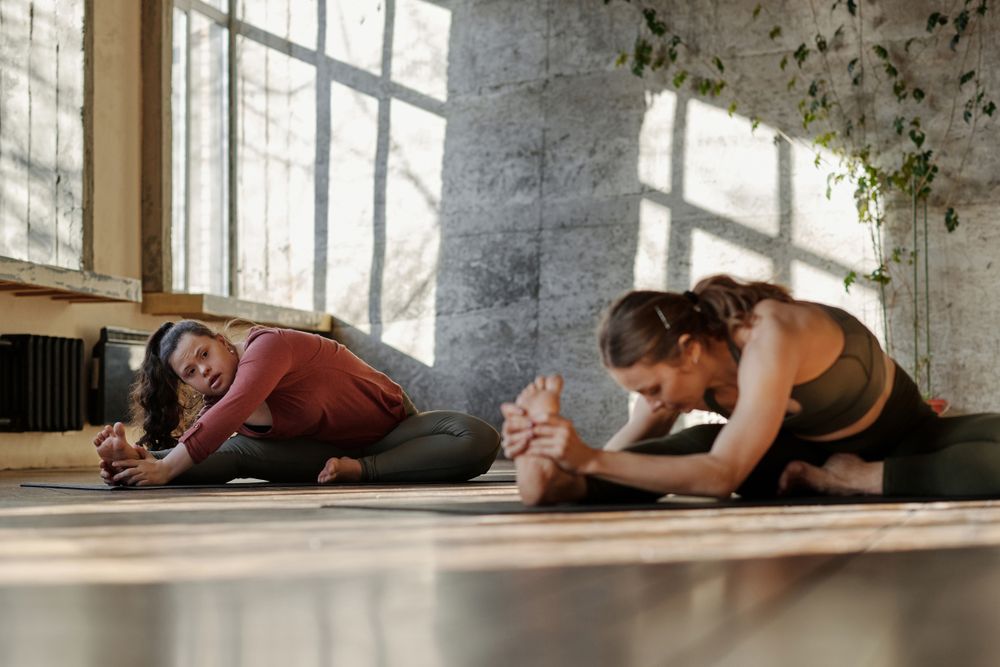
About the Class
Getting started includes learning about the platform and basic transitions. Adding arm movements or turns can change the coordination demands; simpler options can be discussed within the class offered. You do not need to follow an entire combination immediately or assume everybody must move at the same pace.
If a lively, music-led class appeals to you, we can explore Step Aerobics together. Share your group-class experience, preferred learning pace and questions to discuss the available ways to begin.
Step Aerobics is an exercise approach in which steps on and around a platform are organized into sequences, often using music and verbal guidance. It involves more than repeatedly climbing onto a raised surface as quickly as possible. Foot placement, weight transfer, direction changes and arm movements can combine into a more complex coordination task. When asking Gizem Köymen about Step Aerobics, you can discuss the level of the current class, how basic steps are introduced and which participation options are available. The same class name does not mean every programme uses identical content or pacing.
The step platform provides a support surface that should remain securely in place during movement. Its contact with the floor, nonslip surface and any riser components are part of becoming familiar with the equipment. Space around the platform matters too: another participant or an object entering the movement area can change a planned transition. Platform height is not selected from one universal setting for everyone. Experience, movement pattern and the demands of the task need consideration together. A higher platform does not, by itself, demonstrate better technique or a more successful session.
During a basic ascent, it is useful to understand where foot contact occurs and when weight transfers to the supporting surface. Placing the foot on the platform and transferring weight away from the other leg describe different moments. The body's pathway, step distance and balance requirements change during ascent and descent. Details such as approaching the platform edge can be observed, but one image cannot establish a person's movement capacity. Understanding where and how a step will land is part of learning the task, alongside remembering the sequence.
Music can provide a helpful timing reference, but every audible beat does not necessarily need to match a foot contact. A movement may extend across several counts, or a transition may require additional time. Musical tempo, sequence complexity and platform height are separate variables. A faster pace changes the time available to organize the same step. Keeping up with the beat therefore does not prove that the task has been understood. Explaining the count and then the movement pathway can make a transition clearer without treating speed as the only measure of progress.
Combinations are often learned by linking shorter patterns. Adding an arm movement, turn or new direction can increase attention demands even when the leg sequence is familiar. Continuing with a basic step, choosing a simpler route around the platform or leaving out a turn may be among the options offered in class. These alternatives do not indicate failure; they organize the coordination task differently. Changing which side starts a pattern is another detail that can be discussed. The experience on both sides does not have to feel identical.
Lower-impact movement does not mean every moment will feel light or equally easy for everybody. A step without jumping can still demand considerable effort depending on platform height, tempo and repeated transitions. Larger arm movements or longer steps can also alter the overall demand. Judging difficulty only by the presence or absence of jumps therefore misses important information. Progression involves considering how the person follows the movement and describes the effort, rather than increasing every variable simultaneously. There is no compulsory platform height or musical speed that establishes a universal starting level.
Descending or moving sideways can require different spatial awareness from stepping forward. Describing which transition feels unclear helps make instruction more specific without treating every change in balance as a mistake.
Preparation questions can include how simpler movement patterns are introduced, how time is allowed for transitions and how the session alternates busier and simpler sections. Water access, comfortable clothing and footwear appropriate to the floor can also be discussed in advance. An instructor's explanation of available options helps clarify the actual class experience. It is more informative than assuming a particular atmosphere, sequence or progression timetable from a short promotional clip. Current scheduling and participation details are confirmed through direct contact.
When considering Step Aerobics, look at the teaching approach and movement options as well as the energetic atmosphere. Sharing previous group-class experience and questions about following music can make an introductory conversation clearer. Pain, dizziness or an unusual symptom should not be treated as an expected goal of learning the rhythm; activity can be stopped while appropriate assessment is sought. Contact Gizem Köymen to ask about the current Step Aerobics programme and discuss the practical details of a suitable starting point.
What Do We Focus On?
- Understanding the platform and support surface
- Step patterns and weight transfer
- Music, counting and movement timing
- Direction changes and coordination
- Lower-impact movement options
- A class flow adjusted to the participant
Your Starting Point
An option for people curious about moving to music, learning step sequences and exploring coordination. Ask in advance about the current class, basic steps and simpler movement options.
A Little Preparation Before Class
- Choose comfortable sportswear that lets you move freely.
- Bring water and ask about any class-specific equipment or preparation when arranging your session.
- Share your previous movement experience and class goals when we first talk.
Ask about current class times, options and prices in your enquiry.